Castells: Intangible Cultural Heritage of Humanity UNESCO (2010)
On November 16, 2010, in Nairobi, Kenya, UNESCO inscribed castells on the Representative List of the Intangible Cultural Heritage of Humanity. With that decision, a tradition more than 200 years old received the highest international recognition as a living and distinctive cultural expression.
Castells, multi-storey human constructions built by casteller groups, were born in the late 18th century in the Camp de Tarragona area and have since spread across Catalonia and beyond. Their inscription on the UNESCO list was a turning point: what had long been a deeply rooted local festive practice became a symbol recognised worldwide.
Today, building castells is not just about preserving tradition. It is about showing that trust, teamwork and inclusion can literally build something extraordinary.
What is the Intangible Cultural Heritage of Humanity?
UNESCO's Representative List of the Intangible Cultural Heritage of Humanity protects and gives visibility to traditions, practices and cultural expressions passed from generation to generation. Unlike tangible heritage, monuments, buildings or landscapes, intangible heritage covers the non-material side of culture: knowledge, rituals, festivals, music and techniques that define a community's identity.
Catalonia and Spain have several elements on this list. La Patum de Berga was recognised in 2005. Flamenco was inscribed in 2010, the same year as castells. The Mediterranean diet was inscribed in 2010 and expanded in 2013, and the Falles of Valencia in 2016. Within that context, castells stand out for combining collective physical effort, intergenerational transmission and open participation across age groups.
Why were castells declared heritage?
"an integral part of their cultural identity, transmitted from generation to generation and providing community members a sense of continuity, social cohesion and solidarity."
With those words, UNESCO recognised that castells meet the core criteria for intangible heritage: intergenerational transmission, social cohesion and solidarity among participants. They are neither a show nor a sport. They are a cultural practice in which grandparents, parents and children take part together, where everyone has a place, from the pinya to the pom de dalt, and where success depends entirely on mutual trust.
The candidacy was promoted jointly by the Generalitat's Department of Culture, the Coordinadora de Colles Castelleres de Catalunya (CCCC) and the magazine Castells, with the support of numerous local councils. The process required extensive documentation of the history, practice and social value of castells to prove their singular nature before UNESCO's evaluating committee.
What makes castells truly unique is their voluntary and inclusive character. There are no professional or paid castellers: everyone takes part by conviction. Colles bring together people of all ages, from very young children to veterans well into their seventies, of any gender and any background. That diversity is not an extra; it is the foundation of the casteller tradition itself.
The impact of the declaration
Growth of the casteller world
UNESCO recognition acted as a catalyst for sustained growth. While the Coordinadora grouped 56 colles in 2010, the casteller world today brings together more than one hundred colles across the Catalan-speaking territories, around 13,000 registered members and more than 12,000 castells every year.
Towns with no previous casteller tradition have founded their own groups, while places with a long history have seen their participant base renewed and expanded. The inscription gave visibility and prestige to an activity that, despite its richness, had long remained relatively unknown beyond the Catalan sphere.
International expansion
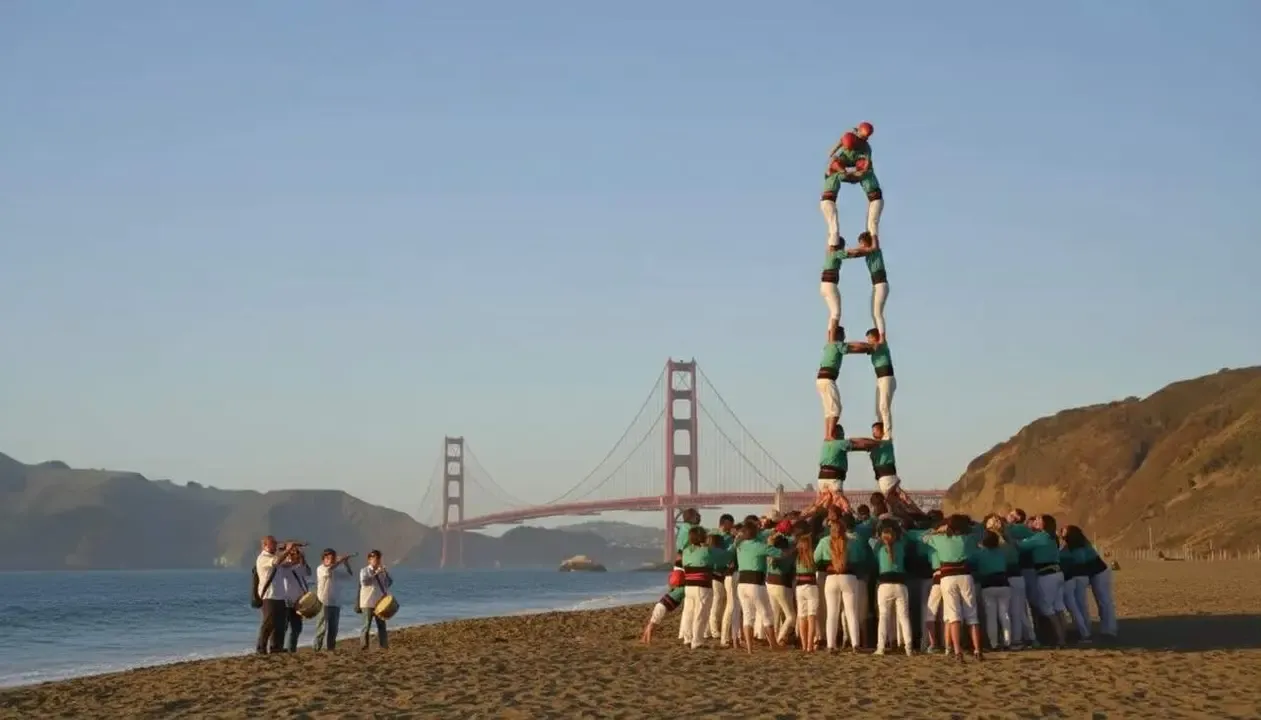
One of the most visible effects of UNESCO recognition has been the expansion of castells beyond Catalonia. Today there are casteller groups in cities such as Paris, Brussels, London, Edinburgh, Berlin and Copenhagen. These groups, made up both of Catalans abroad and of local people drawn to the tradition, rehearse regularly and take part in meetings and public displays.
International appearances have multiplied: Catalan colles travel to cultural fairs, festivals and corporate events in Europe, Asia and the Americas. Tourist interest has also grown, with visitors planning trips around major casteller performances and competitions such as the Concurs in Tarragona, held every two years.
Media and tourism recognition
To mark the fifteenth anniversary of the inscription, the CCCC is promoting the 2025 campaign "Som Patrimoni. Som castells". TV3 and the 3cat platform give regular coverage to major performances and competitions, while international outlets such as the BBC, The New York Times and Al Jazeera have featured castells as a unique cultural phenomenon.
That media exposure has helped establish castells as one of Catalonia's most recognisable symbols worldwide. For companies and institutions, linking an event to a tradition recognised by UNESCO brings a cultural and symbolic value that few other activities can match.
How to experience UNESCO heritage at your event
Bringing castells to your corporate event means offering your guests a cultural experience recognised by UNESCO. This is not a conventional show: it is a living tradition in which participants can watch, and even become part of, a human construction that requires trust, coordination and teamwork. For international delegations, it is one of the most authentic ways to connect with Catalan culture.
Whether you are organising a company dinner, a conference, a team-building session or a celebration, a casteller performance turns any occasion into a memorable and distinctive moment. See how we adapt the tradition to your format at Castells for corporate events →