What are castells? Human towers of Catalonia
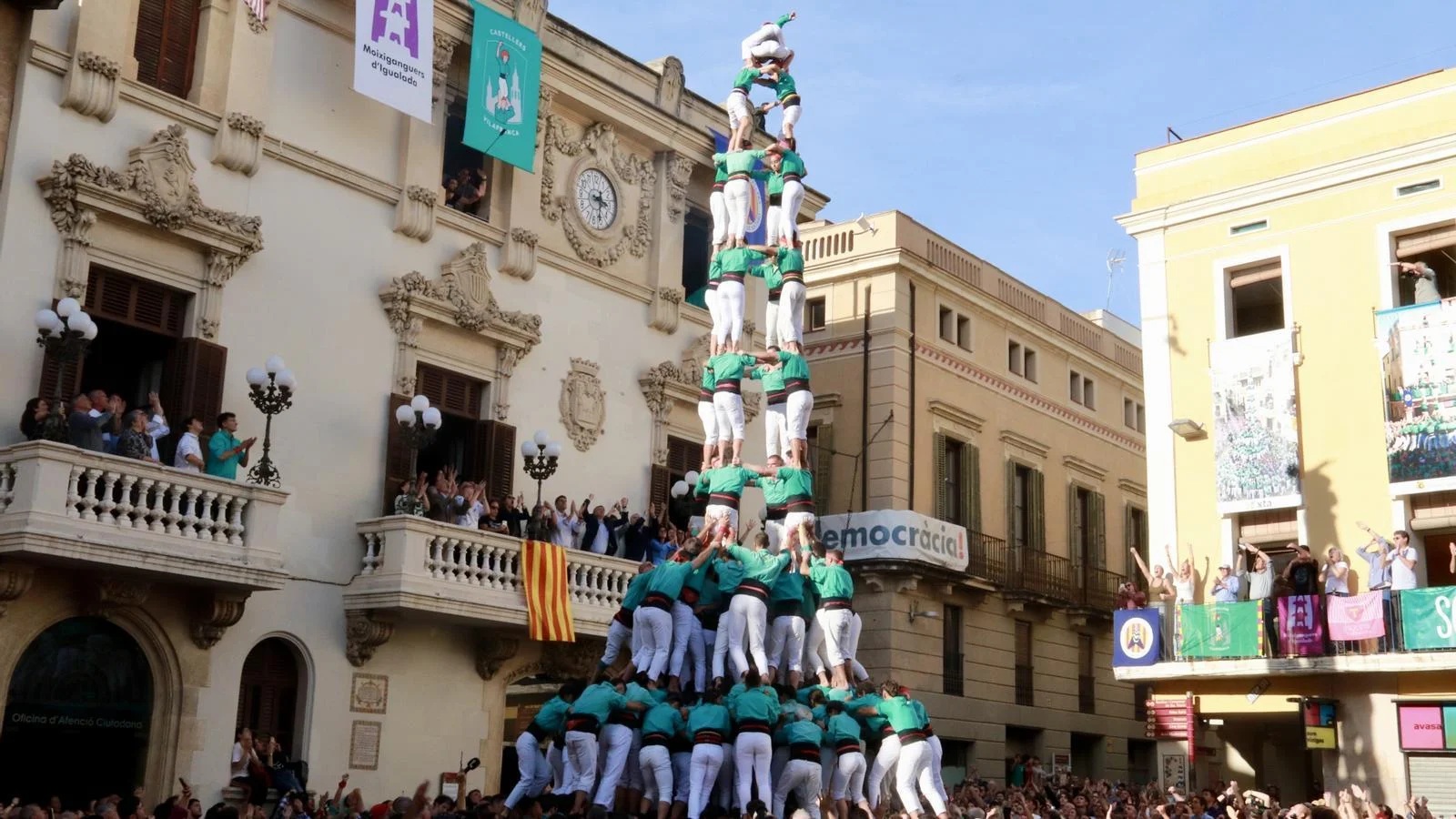
Castells are human towers built in Catalonia for more than 200 years. Dozens of people organise themselves to raise structures of up to ten storeys, with no harnesses or artificial support: only human bodies, balance and mutual trust.
On November 16, 2010, UNESCO inscribed castells on the Representative List of the Intangible Cultural Heritage of Humanity, recognising them as a living expression of social cohesion and collective identity. Today, the casteller world brings together more than one hundred colles across the Catalan-speaking territories, around 13,000 registered members and more than 12,000 castells every year.
At a glance
- Definition
- Human towers built collectively, without artificial structures, in Catalonia for more than 200 years.
- Origin
- They emerged in the 18th century in Valls, in the Camp de Tarragona region, from the Ball dels Valencians tradition.
- Why they matter
- UNESCO recognised castells as Intangible Cultural Heritage of Humanity on November 16, 2010.
- Scale today
- More than 100 colles, around 13,000 registered members and more than 12,000 castells built every year.
Quick comparison of a castell's main parts
| Aspect | Pinya | Trunk | Pom de dalt |
|---|---|---|---|
| Function | Provides stability and protection. | Raises the structure level by level. | Crowns the castell and marks the final aleta gesture. |
| Who forms it | Dozens of people forming the base. | Castellers climbing the central levels. | The dosos, acotxador and enxaneta. |
| Why it matters | Without a strong base there is no safety. | It is the visible body that defines the type of castell. | It turns collective effort into the defining climax. |
History
The origins of castells go back to the 18th century in the town of Valls, in the Camp de Tarragona area. The tradition grew out of the Ball dels Valencians, a processional dance related to the Valencian Muixeranga, from which the acrobatic element of building human towers gradually became independent.
During the 19th century, castells spread through Camp de Tarragona and Penedes, and rivalry between colles pushed structures ever higher and more complex. After a period of decline during the Spanish Civil War and the Franco dictatorship, the 1960s and 1970s brought a spectacular revival. The widespread inclusion of women in the 1980s triggered a technical and social revolution that opened the door to the golden age we see today.
Explore the history of castells in depth →
Structure of a Castell
Every castell is made up of three key parts, each with an essential role in the structure's stability and safety.
The pinya (base)
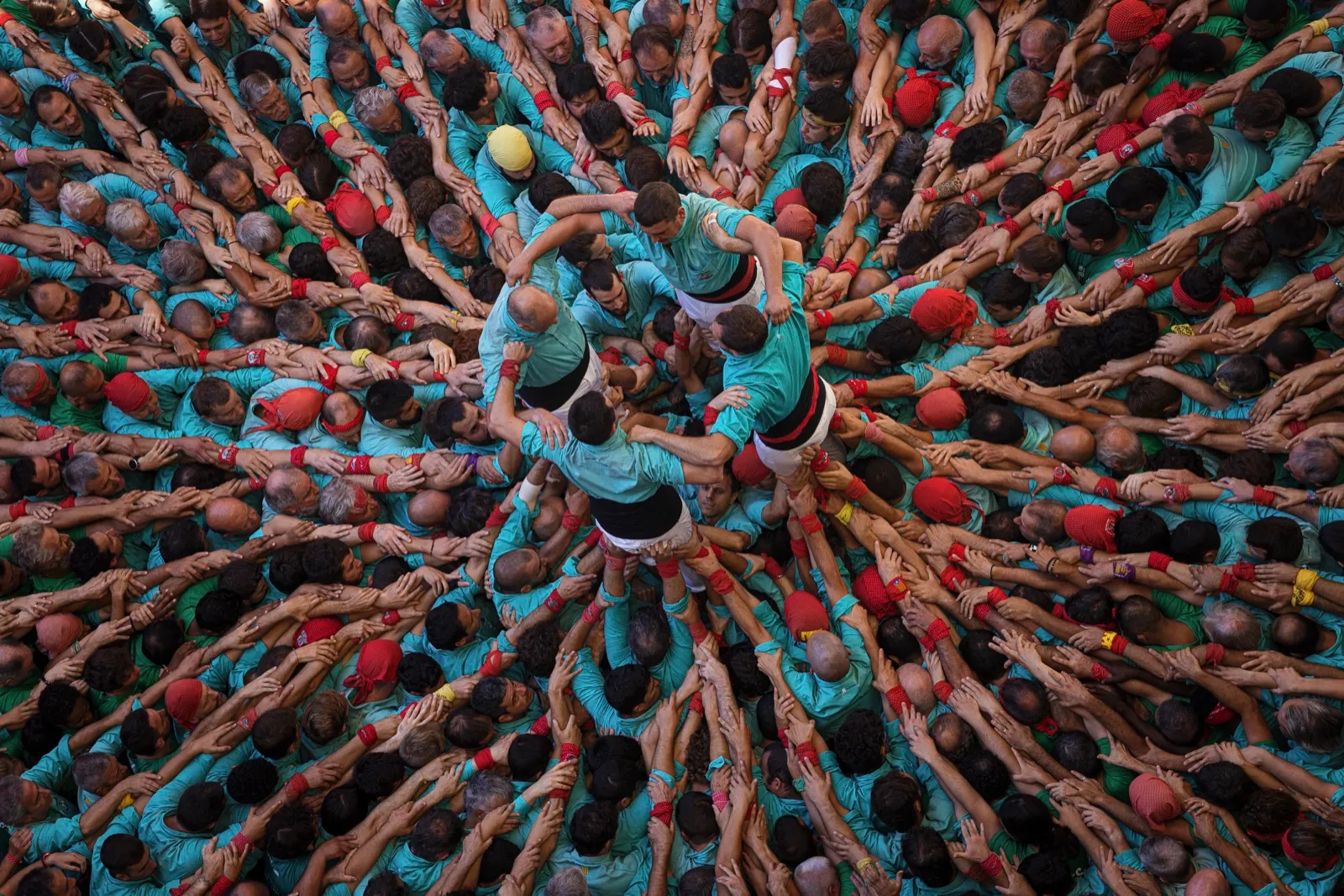
The pinya is the compact base of the castell, formed by dozens of people standing shoulder to shoulder to create a solid platform. It has a double function: it supports the trunk above and acts as a safety cushion if the structure falls. In more complex castells, extra support layers are added: the folre and the manilles, which make 9- and 10-storey structures possible.
The trunk
The trunk is the visible vertical body of the castell, formed by the levels of castellers standing one on top of another. Each level can have between one and four people, and that number gives the structure its name: a pilar (1 per level), a torre (2), a tres (3) or a quatre (4).
The pom de dalt (top crown)
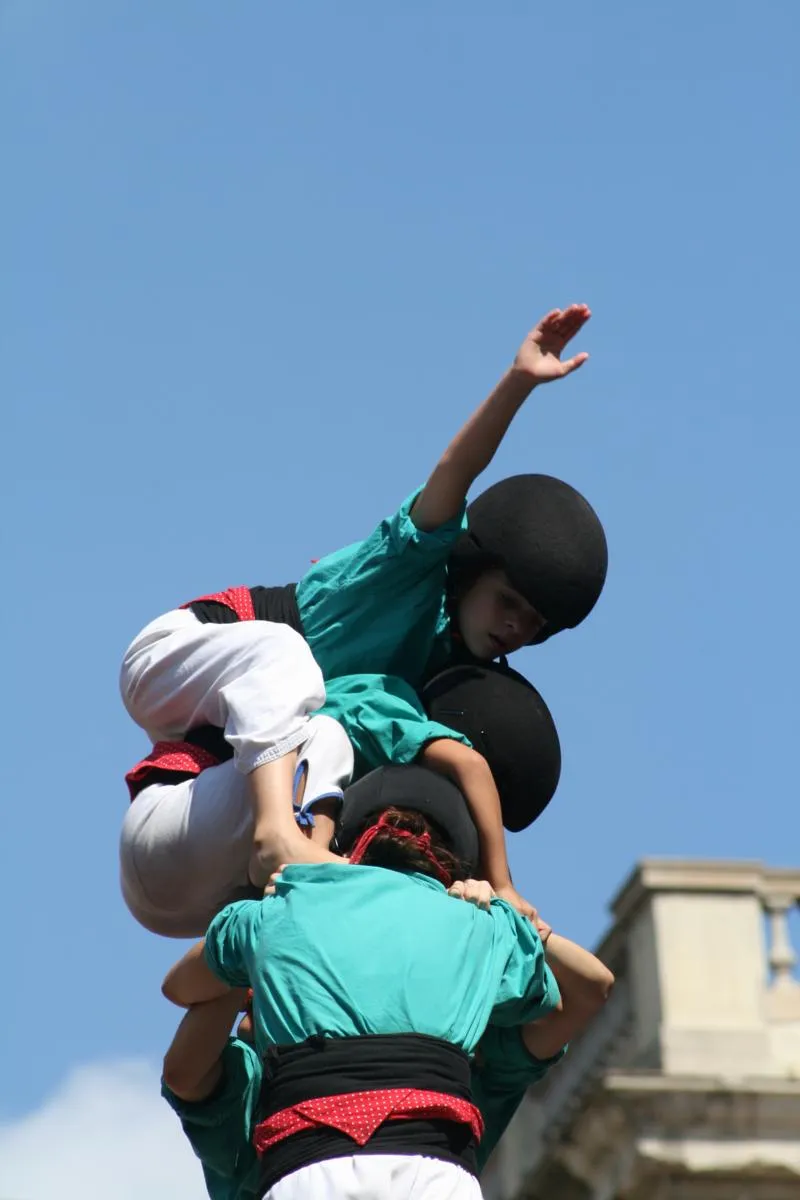
The pom de dalt is the crown of the castell, formed by the dosos, the acotxador and the enxaneta, the child who reaches the top and raises their hand in the gesture known as fer l'aleta, marking that the castell has been loaded.
Read the full castells glossary →
Discover every type of castell →
UNESCO Heritage
On November 16, 2010, meeting in Nairobi, Kenya, UNESCO inscribed castells on the Representative List of the Intangible Cultural Heritage of Humanity. The decision recognised that castells are:
"an integral part of their cultural identity, transmitted from generation to generation and providing community members a sense of continuity, social cohesion and solidarity."
Since that recognition, the casteller world has grown dramatically: it now includes more than one hundred colles, close to 13,000 registered members and over 12,000 castells every year, alongside established groups in cities such as Paris, Brussels, London and Berlin. To mark the fifteenth anniversary of the recognition, the CCCC is promoting the 2025 campaign "Som Patrimoni. Som castells".
Castells music
Music is not just accompaniment: it is an essential communication tool. The gralla, a double-reed wind instrument, and the timbal mark every phase of the build. The toc de castells tells castellers, who often cannot see the structure from inside the pinya, exactly what stage the castell has reached. Without music, there are no castells.
Read more about castells music →
Castells at corporate events
Today, castells have gone far beyond town squares in Catalonia to become one of the most striking and authentic corporate experiences available in Barcelona. Organisations such as FC Barcelona, the United Nations, the European Commission and the Generalitat de Catalunya have trusted casteller performances for their events.
A casteller performance lasts around 10 minutes and conveys teamwork, trust and collective achievement in a way that no conventional team-building activity can match. Guests can join the pinya themselves, creating a shared moment that is hard to forget.
See how to bring castells to your event →